
Resumen de noviembre de UK&I MUG: un nuevo formato, nueva energía y grandes conversaciones
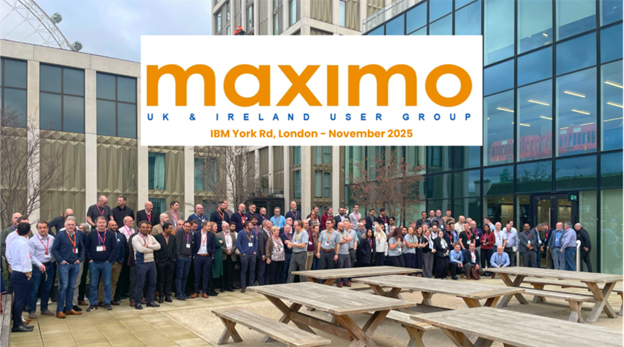
This November, the UK & Ireland Maximo User Group (MUG) community gathered at IBM’s York Road offices in London for what became one of the most energizing and forward-thinking meetups to date. With a brand new two-day format, a packed agenda, and nearly 200 attendees each day, the event struck the perfect balance between hands-on technical learning and user-led storytelling.
What made this MUG special wasn’t just the new format, it was the energy. There was a real sense of momentum across both days: organizations accelerating their MAS journeys, users digging deeper into reliability and mobility, and a growing curiosity around AI’s role in asset-intensive operations. This felt, more than ever, like a community moving forward together.
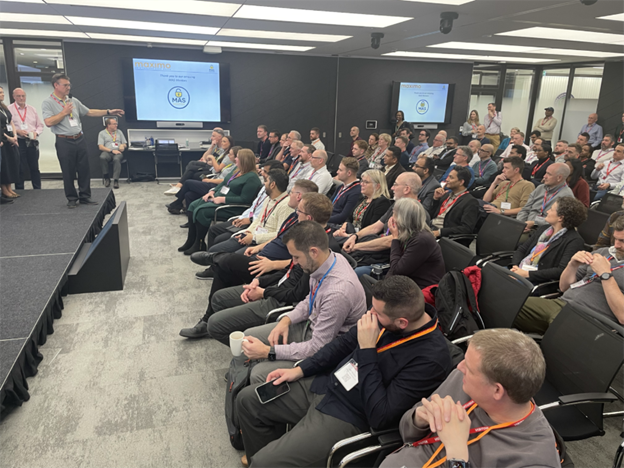
Day 1 debuted MAS Unlocked, transforming an entire floor of IBM York Road into an interactive, multi-room learning environment. Guided by colored badges, attendee groups rotated through themed rooms every 30 minutes, each focused on a different capability within the Maximo Application Suite.
Room topics covered:
Drop-in clinics ran alongside the main rotations, including Manage, Asset Lifecycle Management, Red Hat, Upgrades and Automation, offering attendees direct access to IBM designers, developers, and partner experts.
The AI session was one of the most popular rooms of the entire event, with a queue forming outside for much of the day. It’s clear that AI is no longer seen as an add-on but is becoming central to how organizations are thinking about reliability, inspection, decision support, and long-term asset strategy.
Our Naviam experts proudly supported some of the sessions, alongside IBM across Manage, Mobility, Reliability, and Visual Inspection, helping users troubleshoot challenges, explore new capabilities, learn about current projects and understand how MAS can be shaped to fit real operational needs.
Andrew Jeffery, Senior Maximo Consultant with Naviam and author of MaximoSecrets, and Christiaan Loc of MaxLogic joined IBM's Steve Lee for the Manage Drop-In session to cover all things Manage related.
In this session, it was interesting to see a majority of functional questions over technical ones. The use of Asset Templates also appeared more than once as a possible solution.
Andrew shared: “The first question was about integrating sensors on wearables from a vendor looking to do some integration; the last question was about tracking assets that regularly move across sites and how to locate them. This led to discussions on RFID or NFC tags and Maximo Mobile Asset Manager, which has an ‘auditing’ capability. All interesting discussions, which kept others in the room."
Naviam's Lee Daley, Customer Success Director, and John Rotaru, Senior Technical Pre-Sales Consultant, joined Ian Sellars from IBM to host an insightful session on Mobility in MAS. Each session across the day was packed-out, indicating that mobility remains a top priority for those involved in asset management.
Lee said: “Whether attendees were interested in empowering the workforce or evaluating the suitability of their chosen application, the topic clearly resonated. Each session was highly engaged, with questions continuously flowing from start to finish.”
John added: "Mobility remains front and center for many organizations. Attendees were keen to understand what truly works offline, how to streamline technician workflows, and the best ways to bring field teams on the MAS journey. Being able to share real-world examples from challenging environments helped show what’s possible today and what’s coming next."
Dominic Bramley, Head of Pre-Sales with Naviam, and Damien De Gouveia of Cohesive hosted the Reliability Strategies session with over 40 organizations attending over the course of the day.
The session proved to be of great interest, the general understanding being that Reliability-Centered Maintenance is an effective way of reducing downtime and optimizing PM regimes within asset intensive organizations but can be a costly exercise to undertake.
However, the session demonstrated how Reliability Strategies is included with MAS ‘free of charge’ and can accelerate the implementation of RCM with access to an extensive library of failure data and mitigation activities, a custom builder and AI assistance. Attendees were engaged with plenty of questions and suggestions for future enhancements that will be fed back to IBM.
Dominic shared: "A straw poll of organizations who attended the sessions revealed that while 70% were using Maximo failure codes to some degree, only 15% had an active RCM program in place. However, 60% said they plan to undertake this in future, showing clear intent to move toward structured RCM.”
Naviam Product Developer Michael Rawlinson, who has recently been working on an exciting MVI project, joined Russ McKay and Claudio Guerrero from IBM to lead this session with live demonstrations.
The session focused on the simplicity and flexibility of MVI. While many initially assumed it was designed mainly for manufacturing environments with consistent inputs, we explored how its use cases are far broader. As the associated technology becomes better in quality and lower in cost, the potential capabilities across many sectors are endless.
Michael told us: “MVI can handle less structured inputs and adapt to varied scenarios, making it highly versatile. We also discussed how the underlying architecture required to run MVI in an organisation can be implemented at a much lower cost than most people think. "
Alexander Delic (MaxTAF) and Sandra Gannon from IBM hosted the most popular room of the day with a fantastic session on AI in MAS, and Alex kindly shared some of his findings from the day. Their goal was to provide attendees with a "critical questions" framework for upcoming AI initiatives. Users really valued having concrete criteria to evaluate AI tools, rather than just hype.
A hands-up user poll showed a strong appetite to learn more about how AI might help on their EAM mission (80%+ were at least ‘curious’). When asked about adoption timelines, this varied widely from 1 year (10%), 2 years (40%) to 3-5 years (about 80%).
There was clear agreement on two key points: that hallucination is a genuine concern, and AI systems should explicitly state when they can't find an answer rather than fabricate one.
Also, there was clear recognition that conversational interfaces can actually be superior to traditional methods for complex queries. Being able to ask for data in natural language and chain multi-stage questions feels more intuitive than needing technical expertise to navigate complex screens.
Alex added: “It was clear from my session that the interest in AI for improving asset management missions is definitely here, and the community definitely 'feels' that AI is more than just hype. There was consensus that the true mission over the months and years ahead is going to be working on identifying the areas where AI can genuinely add value, while still being trustworthy.”
Day 2 returned to the traditional MUG structure, bringing forward the authentic, user-led stories, that make this event so valuable. The morning was filled with practical insight from organizations navigating everything from large-scale transformation to operational modernization. Each presentation prompted lively discussion, with attendees eager to benchmark their own journeys against the experiences shared.
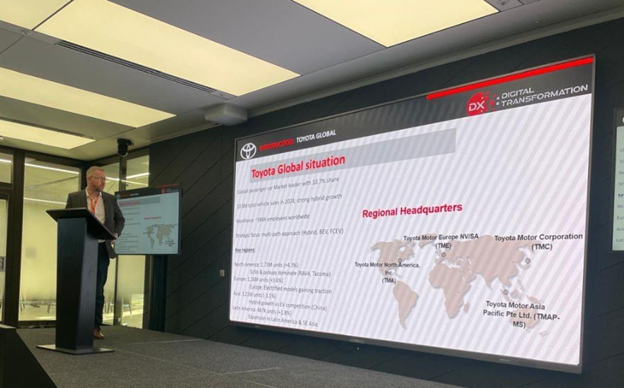
Presented by Asset Management Systems Specialist with Toyota, Phil Tuckley
Toyota opened the morning with a grounded and practical look at their long-standing Maximo evolution. Phil shared how Toyota continues to refine its asset management practices through consistent processes, structured governance, and a strong focus on user adoption across distributed sites.
Their journey highlighted the importance of building capability step by step, ensuring that every improvement genuinely supports the technicians and teams who rely on Maximo every day. It was an honest, relatable account of modernizing operations without losing sight of day-to-day realities.
Presented by Martin Eklund (Stena Drilling) with Andrew Carrie (Cohesive)
Stena Drilling’s session shone a light on high-risk, remote offshore environments. Martin and Andrew walked the audience through Stena’s MAS upgrade journey, regarded as a first for MAS implementations in a disconnected environment.
The presentation included how they minimalized downtime while handling complex data, to ensure stable go-lives in environments where disruption simply isn’t an option. They demonstrated how thoughtful planning, strong collaboration, and the right approach can deliver a zero-disruption upgrade, even under extreme constraints.
Presented by Andy Beebee & Stuart Begent (Southern Water)
Southern Water provided a candid look at the organizational and cultural side of MAS adoption. Their journey explored how mobility is transforming frontline work, how change is being embedded in operational teams, and what early improvements they’re already seeing in asset reliability and service responsiveness.
Los ponentes ofrecieron una perspectiva atractiva y equilibrada, reconociendo el esfuerzo que implica modernizar los procesos de larga data y, al mismo tiempo, mostraron los beneficios tangibles que la movilidad dentro de la gestión estructurada de activos está desbloqueando en toda su red.
Presentado por Richard Thomas, director sénior de productos de Asset Management Systems (Transporte a Londres)
Dada su ubicación en Londres, la presentación de TfL proporcionó información sobre cómo Maximo apoya uno de los ecosistemas de activos más grandes y complejos del Reino Unido, con más de 10 000 técnicos del metro de Londres que confían en él a diario. Describió cómo la plataforma sustenta el mantenimiento de miles de activos críticos y ayuda a gestionar un vasto panorama de equipos internos y contratistas externos.
Richard analizó cómo se está integrando el MAS a gran escala, los desafíos de adopción que conlleva una organización del tamaño de TfL y los beneficios operativos que ya están surgiendo, como la mejora de la confiabilidad, la prolongación de la vida útil de los activos y la reducción de las fallas críticas, lo que dio a los asistentes una idea convincente del impacto que puede tener un programa MAS bien adoptado.
Presentado por Andrew Foster, IBM
Andrew cerró la mañana con una sesión de hoja de ruta que conectó los puntos entre los comentarios de los usuarios, las prioridades de desarrollo y la dirección futura de MAS. La actualización abordó la evolución de las capacidades en los flujos de trabajo de monitorización, predicción, gestión y dispositivos móviles, así como la forma en que las presentaciones de iDeaS siguen dando forma a las mejoras. Fue una sesión abierta y transparente que ayudó a los asistentes a prepararse para lo que viene y a entender cómo sus comentarios influyen en la línea de productos MAS.
Envíe sus ideas, sugerencias y comentarios a IBM mediante este enlace.
Tras el almuerzo, las siempre populares mesas redondas llevaron a los presentadores directamente a la sala con los asistentes para mantener conversaciones sinceras y prácticas. Estas sesiones suelen dar como resultado el verdadero oro: compartir experiencias de forma honesta, decir «esto es lo que nos ha funcionado» y soluciones que se pueden aplicar de inmediato.
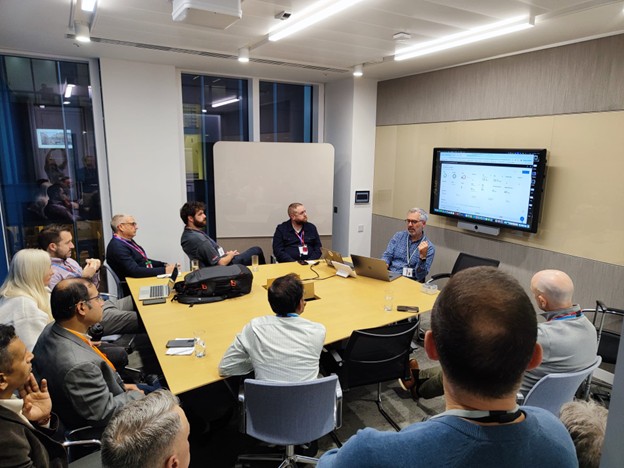
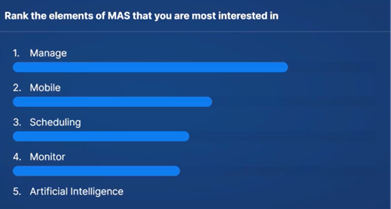
Las preguntas de las diapositivas y las encuestas en vivo ayudaron a guiar el debate, lo que reforzó una vez más la capacidad de respuesta y la orientación de los usuarios que sigue teniendo el comité organizador del MUG.
La energía de ambos días fue inconfundible, un testimonio del compromiso de la comunidad, el creciente interés por el MAS en todos los sectores y la disposición de los asistentes a compartir, aprender y desafiarse unos a otros.
El evento de este mes de noviembre pareció un momento histórico. El nuevo formato funcionó. Las conversaciones fueron más profundas. Y las sesiones prácticas proporcionaron un valor real y tangible. A medida que las organizaciones aceleran su transición a Maximo Application Suite, eventos como este ayudan a brindar la claridad, la confianza y el apoyo de la comunidad necesarios para seguir adelante.
Fue un privilegio ser parte de un evento tan colaborativo y con visión de futuro. ¡Ya estamos deseando que llegue el próximo!
7 de mayo de 2026 - Dundee, Escocia
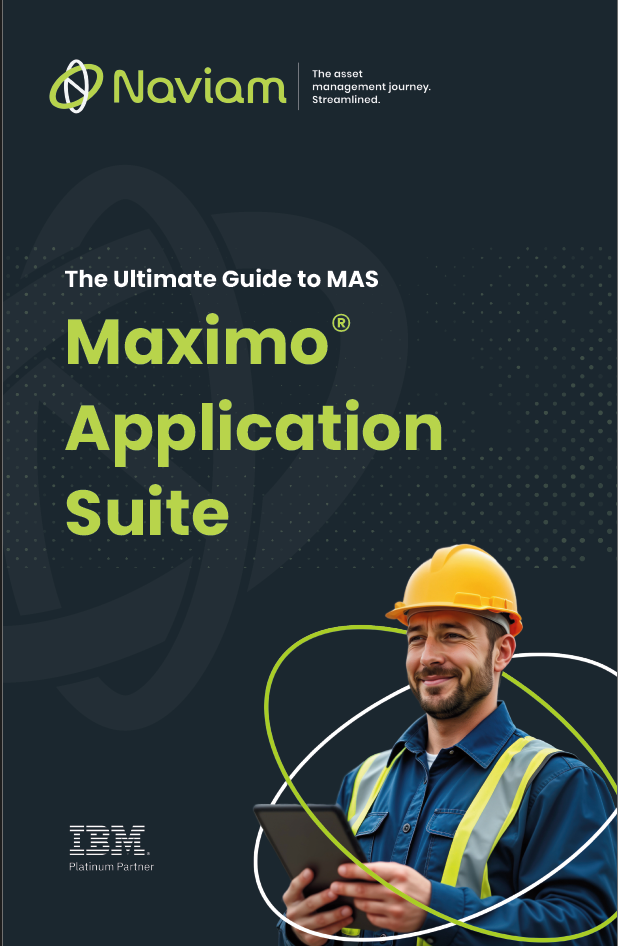
Discover everything you need to know to modernize your asset management strategy.
Inside, you’ll learn:

ActiveG, BPD Zenith, EAM Swiss, InterPro Solutions, Lexco, Peacock Engineering, Projetech, Sharptree, and ZNAPZ have united under one brand: Naviam.
You’ll be redirected to the most relevant page at Naviam.io in a few seconds — or you can
go now.

.avif)