
10 Signs Your EAM System Is Holding Your Business Back
.jpg)
Enterprise Asset Management systems are rarely replaced because they “stop working.” More often, they continue functioning: processing work orders, tracking assets, generating reports while quietly becoming misaligned with the business.
Over time, what once felt like a strategic platform can become an operational constraint. Technology advances, and data expectations grow. That should lead to maturing reliability strategies. Meanwhile, the system remains largely the same.
If your organization has invested in digital transformation, predictive maintenance, or operational efficiency, but progress feels slower than expected, your EAM platform may be part of the friction.
Here are 10 signs your EAM system may be holding your business back.
Many organizations have moved beyond purely reactive maintenance. They talk about condition-based strategies, predictive analytics, and reliability-centered maintenance. But if your EAM is still configured primarily for preventive schedules and reactive work capture, there’s a disconnect.
A modern EAM should support the full maintenance maturity curve:
Reactive → Preventive → Condition-Based → Predictive → Prescriptive
If your platform makes it difficult to track condition data, integrate sensor inputs, or align work with failure modes, your strategic ambitions may be outpacing your system’s capabilities.
Collecting data is no longer the challenge. Most organizations now capture work history, failure codes, asset hierarchies, cost data, and sometimes even IoT streams. The issue is turning that information into actionable insight.
If your teams rely heavily on spreadsheets to analyze performance, or if reporting requires manual extraction and reformatting, your EAM may be functioning as a storage system rather than a decision engine.
Leadership should be able to answer questions such as:
If those answers require significant manual effort, the system is limiting visibility rather than enhancing it.
Modern operations do not operate in silos. Finance, supply chain, operations, engineering, and IT all depend on connected systems. An EAM platform should integrate cleanly with ERP systems, procurement tools, inventory management, and operational data sources.
When integration requires custom scripts, brittle interfaces, or constant maintenance, it introduces risk. Over time, organizations build layers of technical debt just to keep systems communicating.
A strategic EAM platform should function as part of a broader digital ecosystem, not as a standalone object.
One of the clearest indicators of a system’s health is how willingly people use it.
If technicians see the EAM as administrative overhead rather than operational support, you’ll notice behaviors such as delayed updates, incomplete failure coding, or parallel tracking systems. These workarounds are rarely intentional acts of resistance but are signs that the system is not aligned with field realities.
Mobile usability plays a critical role here. If field teams cannot easily access asset history, update work orders in real time, or document issues efficiently, the system becomes a bottleneck instead of an enabler.
Low adoption inevitably leads to low data quality, and low data quality undermines confidence across the organization.
An EAM’s value depends heavily on the structure of its asset data. Over years of operation, asset hierarchies can become cluttered. Naming conventions drift. Duplicate records appear. Failure codes are applied inconsistently.
The result is a system that technically contains information but not in a way that supports strategic analysis.
Without structured hierarchies and standardized failure tracking, it becomes nearly impossible to:
Data inconsistency does not always feel urgent, but it quietly erodes the system’s long-term value.
Older or heavily customized systems often create hesitation around upgrades. If every enhancement feels like a major IT project or worse, a potential operational disruption, that is a warning sign.
Over-customization can lead to:
When your EAM becomes difficult to evolve, it slows the organization’s ability to innovate. Modern platforms should allow for scalability without excessive rework.
Many organizations aspire to implement condition-based maintenance. They invest in sensors, monitoring tools, or external analytics platforms. Yet when it comes time to integrate those insights into daily workflows, friction appears.
An EAM that cannot easily absorb condition inputs, align them with asset hierarchies, or trigger meaningful maintenance responses creates a disconnect between analysis and execution.
If predictive initiatives feel disconnected from your core maintenance platform, the return on those investments diminishes.
For regulated industries, traceability is critical. Inspection history, corrective actions, and asset lifecycle documentation should be easily accessible and defensible.
If audits require weeks of manual report compilation or cross-checking between systems, your EAM is not providing the transparency it should. Strong compliance capability is not just about avoiding penalties. It strengthens operational discipline and organizational confidence.
An EAM system should serve as a single source of truth. When executives question maintenance cost accuracy, backlog numbers, or reliability improvements, it often signals deeper systemic issues.
Common symptoms include:
Without trusted data, strategic decisions slow down. Capital planning becomes more conservative. Investment in reliability initiatives becomes harder to justify.
Perhaps the most telling sign is subtle. The system works, but it does not drive improvement.
It records work orders. It stores asset information. It tracks inventory movements. But it does not actively support reliability growth, cost optimization, or long-term asset planning.
A modern EAM should do more than document activity. It should help organizations answer forward-looking questions:
If your system cannot support these conversations, it may be time to reassess its role.
An underperforming EAM does not fail dramatically. It fails quietly.
It limits integration, slows insight, and constrains strategy. Over time, those constraints translate into higher downtime, less efficient capital allocation, and missed opportunities for modernization.
Organizations often adapt to these limitations rather than confront them, but adaptation comes at a cost.
In today’s environment where asset reliability, digital transformation, and data-driven decision-making are central to competitiveness, your EAM platform should act as a strategic foundation. If it is merely processing transactions, it may already be holding your business back.
Recognizing these signs does not automatically mean you need to replace your EAM. In many cases, modernization rather than full replacement is the right path.
For organizations running legacy versions of IBM Maximo or other on-premise systems, modernization can unlock capabilities that directly address the issues described above.
For example, modern EAM platforms such as IBM Maximo Application Suite introduce:
Modernizing to a more current architecture can reduce technical debt, simplify integration, and make advanced reliability strategies more achievable.
This shift changes how the organization uses its EAM. Instead of serving as a transactional record of completed work, the system becomes an operational intelligence layer that connects maintenance, reliability, finance, and asset planning. Modernizing is about removing the friction that prevents the system from delivering its full strategic value more so than replacing an existing system that works.
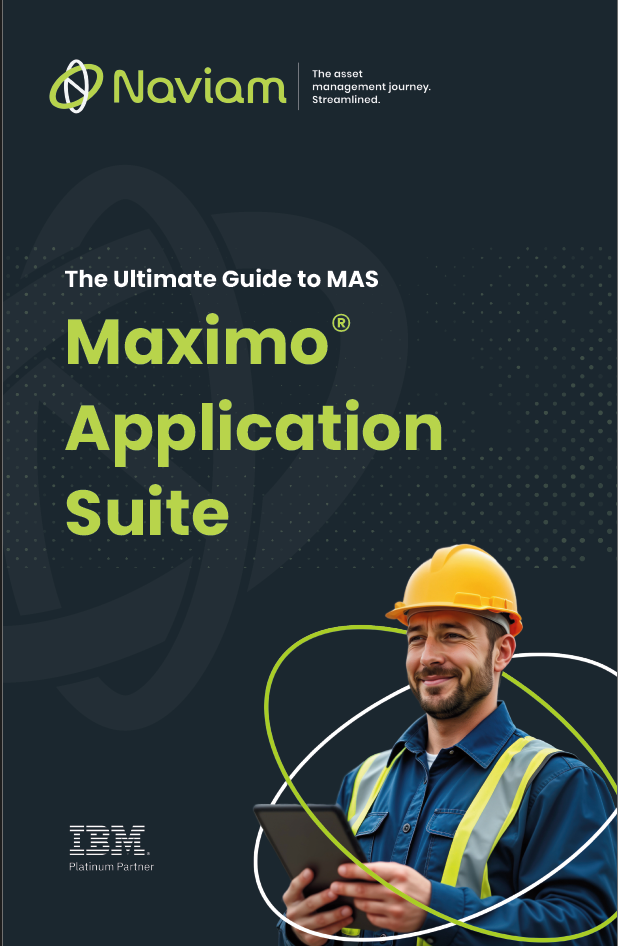
Discover everything you need to know to modernize your asset management strategy.
Inside, you’ll learn:

ActiveG, BPD Zenith, EAM Swiss, InterPro Solutions, Lexco, Peacock Engineering, Projetech, Sharptree, and ZNAPZ have united under one brand: Naviam.
You’ll be redirected to the most relevant page at Naviam.io in a few seconds — or you can
go now.


.avif)