
Repair, Replace, or Run to Failure? Using Maximo to Support Asset Lifecycle Decisions at Scale

Asset lifecycle management is often presented as a linear process, but in reality, it is defined by decision points. Assets age, performance changes, risks emerge, and budgets tighten. At those moments, organizations must decide what to do next.
Should the asset be repaired, replaced, or allowed to run to failure?
These decisions are made daily across large asset portfolios. When supported by reliable data, they drive better reliability and cost control. When based on incomplete information, they introduce risk that compounds over time. This is where asset lifecycle management either succeeds or fails.
Lifecycle decisions are harder today than they were even a decade ago. Organizations face a combination of technical, regulatory, and operational pressures that make traditional approaches less effective.
Common challenges include:
Traditional lifecycle models assumed stable conditions and predictable replacement timelines. Today’s operating environment is far more dynamic, forcing organizations to make decisions with greater uncertainty and higher stakes.
Every lifecycle decision ultimately falls into one of three paths. None is inherently right or wrong. The outcome depends on context, risk, and data quality.
Repair is often the default choice because it appears less disruptive and avoids immediate capital spend. In the right conditions, repair extends asset life and controls cost.
However, repeated repairs can signal deeper issues. Without insight into failure patterns and long-term trends, organizations may over-maintain assets that are no longer economically viable.
Replacement provides a clean reset, but it comes with high upfront cost and long planning cycles. Justifying replacement requires strong evidence and alignment across engineering, operations, and finance.
When that evidence is missing, replacement decisions are often delayed. Assets remain in service longer than intended, increasing the likelihood of unplanned failures.
Run-to-failure can be an intentional and effective strategy for low-risk assets. It reduces unnecessary maintenance and frees resources for higher priorities.
The risk emerges when it becomes an implicit choice for critical assets. In those cases, failures can lead to safety incidents, service disruptions, and regulatory exposure.
Strong lifecycle decisions are not based on instinct alone. They require consistent, trusted insight across the organization.
At a minimum, decision-makers need visibility into:
In many organizations, this information exists but is fragmented across systems and teams. Without a unified view, decisions are slower, more subjective, and harder to defend.
Maximo Application Suite enables organizations to move from reactive judgment to informed, repeatable decision-making. It supports asset lifecycle decisions by connecting operational data across systems and disciplines.
Key capabilities include:
Maximo does not dictate decisions. Instead, it provides a shared foundation of insight that allows teams to evaluate tradeoffs with confidence and consistency.
Making one good lifecycle decision is not enough. Organizations must make thousands of consistent decisions across complex asset portfolios.
At scale, this requires:
Maximo supports this by serving as a single platform for asset data, analytics, and decision support. Over time, organizations shift from reactive responses to proactive lifecycle strategies.
Asset lifecycle management is not defined by frameworks or maturity models. It is defined by decisions made every day across the organization.
Each choice to repair, replace, or run to failure shapes reliability, safety, and cost outcomes. As asset portfolios grow more complex, organizations need tools that turn operational data into decision-ready insight.
Maximo Application Suite enables that shift. By connecting asset condition, performance, risk, and cost, it helps organizations manage lifecycle decisions with clarity and confidence, at scale.
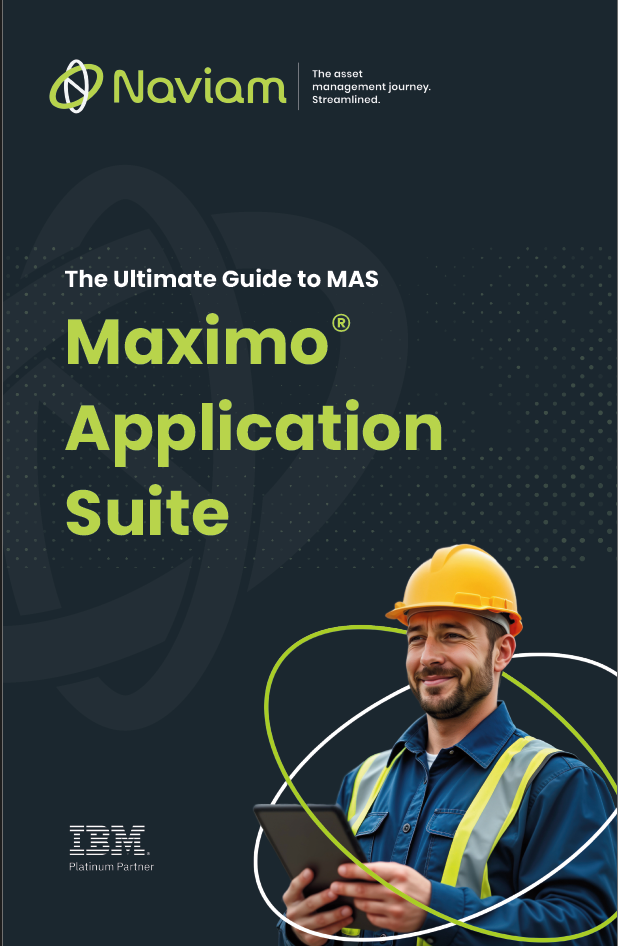
Discover everything you need to know to modernize your asset management strategy.
Inside, you’ll learn:

ActiveG, BPD Zenith, EAM Swiss, InterPro Solutions, Lexco, Peacock Engineering, Projetech, Sharptree, and ZNAPZ have united under one brand: Naviam.
You’ll be redirected to the most relevant page at Naviam.io in a few seconds — or you can
go now.


.avif)