
Why System Assurance Reviews Matter for Maximo and MAS

Organisations running IBM Maximo or Maximo Application Suite (MAS) often rely on these platforms as mission‑critical systems for asset management, maintenance, and operational delivery. However, over time, even well‑implemented solutions can drift away from best practice, suffer performance degradation, or fail to evolve in line with changing business needs.
A System Assurance Review (SAR) provides a structured, independent health check of a Maximo or MAS environment, helping organisations understand how their system is really being used, where risks or inefficiencies exist, and how to move forward with confidence.
A System Assurance Review is a comprehensive assessment of an enterprise system and its supporting infrastructure to confirm that it is:
In the context of Maximo and MAS, a SAR typically spans process, functional, technical, and data dimensions, with optional roadmap and readiness components. Reviews are particularly valuable during upgrades, client onboarding, or whenever independent assurance is required to establish clearer standards and deliverables.
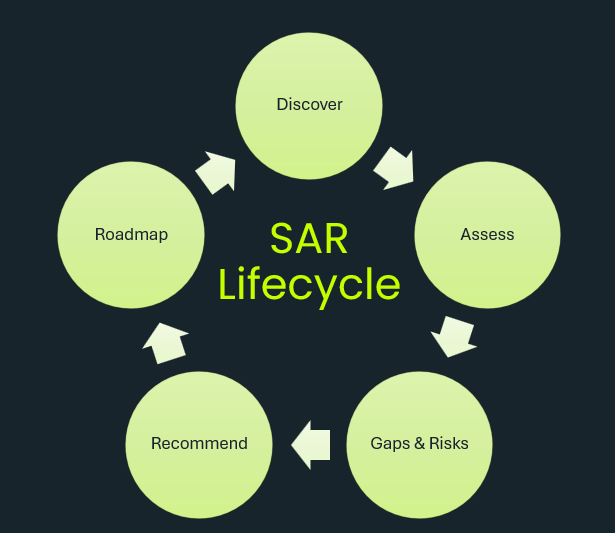
Naviam’s approach to System Assurance Reviews is built around four core assessment areas, each designed to uncover specific risks and improvement opportunities.
A process review focuses on how business processes are configured and executed within the current Maximo or MAS solution.
Key areas include:
Outputs typically include:
This gives organisations a clear understanding of where inefficiencies exist and how processes can be rationalised before taking on additional change.
The functional review assesses whether Maximo or MAS is being used effectively and configured to support both current operations and future capability adoption.
Areas reviewed include:
Deliverables include documented findings and a prioritised set of functional improvement recommendations, helping organisations unlock value from functionality that already exists.
The technical review examines platform health, architecture, and performance to ensure the solution is stable, resilient, and future‑ready.
Typical focus areas are:
The outcome is a set of targeted, risk‑based recommendations to address performance bottlenecks, technical debt, and architectural concerns before they become operational issues.
Data is often one of the hidden contributors to poor system performance and usability. A data review assesses how information is structured, maintained, and used within Maximo or MAS.
This includes:
Outputs highlight quick wins, best‑practice alignment opportunities, and structural improvements that can significantly enhance system usability and performance.
For organisations at different stages of their Maximo or MAS journey, SARs can be extended to cover:
These extensions help clients not just understand where they are today but define a clear and achievable path forward.
System Assurance Reviews deliver the most value when:
In many cases, a SAR also helps build early trust between delivery teams and clients by creating a shared, evidence‑based understanding of the system landscape.
A System Assurance Review is not about producing a report for the sake of it. Done properly, it provides clarity, structure, and actionable insight - enabling organisations to make confident decisions about their Maximo or MAS platforms. Whether the goal is stabilisation, optimisation, or strategic transformation, a SAR establishes the foundation for sustainable improvement.

Discover everything you need to know to modernize your asset management strategy.
Inside, you’ll learn:

ActiveG, BPD Zenith, EAM Swiss, InterPro Solutions, Lexco, Peacock Engineering, Projetech, Sharptree, and ZNAPZ have united under one brand: Naviam.
You’ll be redirected to the most relevant page at Naviam.io in a few seconds — or you can
go now.



.avif)