If a Process Review defines how work flows, a Functional Review defines how the system supports it, and a Technical Review defines how the platform performs, then the Data Review focuses on something equally fundamental:

Is the data underpinning your system accurate, structured, and enabling effective decision-making?

A Data Review assesses how information is structured, maintained, and used within Maximo or MAS, identifying opportunities to improve usability, performance, and alignment to best practice.  

Why Data Reviews Matter

Data is often one of the most overlooked elements of an enterprise system — yet it is a primary driver of both system performance and business effectiveness.

Common challenges include:

  • Poorly structured asset and location hierarchies
  • Inconsistent or incomplete transactional data
  • Overreliance on custom fields instead of standard capability
  • Lack of lifecycle management (closure, archiving, retention)


Over time, these issues can lead to:

  • Reduced system usability
  • Poor reporting and decision-making
  • Performance degradation
  • Loss of trust in the system as a “single source of truth”

A Data Review provides a structured approach to identify and address these issues at their root.

What a Data Review Assesses

A Data Review evaluates how data is organised and used across a Maximo or MAS solution, identifying both structural and operational improvement opportunities. This typically focuses on five key areas:

Data Structures and Design

  • Assessment of how data is structured across the system
  • Review of key objects such as:
    • Assets and location hierarchies
    • Preventative Maintenance (PMs)
    • Job Plans

A well-designed data structure is essential for both usability and scalability.

Use of Standard vs. Custom Data

  • Identification of custom fields and objects
  • Assessment of whether out-of-the-box functionality exists
  • Evaluation of duplication or unnecessary complexity

Excessive custom data design often creates maintenance overhead and upgrade risk.

Transactional Data and Volumes

  • Analysis of transactional data volumes over time
  • Review of how records are created, updated, and processed
  • Understanding how data growth impacts system performance

This helps identify whether data is contributing to performance issues.

Data Lifecycle Management

  • Review of record lifecycles (creation, update, closure, archiving)
  • Assessment of whether data is actively managed
  • Identification of gaps in governance or retention

Unmanaged data growth is a common cause of both performance issues and reporting challenges.

Data Maintenance and Update Processes

  • Assessment of how data is created and maintained (e.g. UI, bulk load tools)
  • Frequency and governance of updates
  • Identification of inconsistencies or risks in data handling

This ensures that data quality is maintained over time — not just at a single point.

How the Review is Delivered

A Data Review may be conducted by Solution Architects, Consultants, or Developers, depending on the scope and client requirements.  

The approach typically includes:

  • Analysis of system data structures and relationships
  • Review of transactional patterns and volumes
  • Assessment of data governance and maintenance practices

The objective is not simply to analyse data but to connect data design to real-world system performance and usability.

What the Review Reveals

A Data Review often uncovers issues that have built up over time, such as:

  • Asset hierarchies that do not reflect real-world structures
  • Excessive use of custom fields instead of standard attributes
  • Data volumes that are impacting system performance
  • Records that are never closed or archived
  • Inconsistent data entry leading to unreliable reporting

It also frequently highlights a critical point: Even the best-configured system cannot perform effectively with poor-quality data.

Typical Outputs and Deliverables

The Data Review is designed to deliver practical, actionable improvements that can often provide immediate value.

Key outputs include:

  • Documented findings and observations of current data design and usage
  • Identification of structural issues and inefficiencies
  • Recommendations for improving data quality and usability from the supporting materials, this also includes:
  • Opportunities to align with core Maximo and best practices  
  • Identification of quick wins to improve system usability
  • Recommendations for creating a more efficient and scalable data model  

These outputs are typically prioritised to enable both immediate improvements and longer-term data strategy.

Connecting Data Review to Business Outcomes

The Data Review plays a key role in delivering the SAR outcomes:

  • Optimised – clean, structured data improves system efficiency
  • Stable – well-managed data reduces performance issues
  • Scalable – strong data foundations support future growth and MAS adoption
  • Trusted – accurate, consistent data enables confident decision-making  

Without high-quality data, improvements in process, functionality, or technology cannot be fully realised.

The Role of Data Review in the SAR Lifecycle

Within the SAR lifecycle — Discover → Assess → Gaps & Risks → Recommend → Roadmap — the Data Review ensures that:

  • The system is built on a reliable data foundation
  • Reporting and analytics can be trusted
  • Future capabilities such as Predict, Health, and analytics can be effectively leveraged

It provides the data integrity baseline required for both operational efficiency and strategic decision-making.

Final Thoughts

If the other elements of a System Assurance Review ensure that processes, functionality, and technology are aligned, the Data Review ensures that the information driving those processes is accurate, usable, and fit for purpose.


By addressing data structure, quality, and lifecycle management, the Data Review enables organisations to:

  • Improve reporting accuracy and decision-making
  • Enhance system usability and performance
  • Reduce data-related risks and inefficiencies
  • Prepare for advanced MAS capabilities and analytics

Ultimately, it transforms data from a potential liability into a strategic asset.

MORE Community Logo
Live from the MORE community

Your Maximo questions probably already have answers

See what Maximo users are asking, answering, and solving right now.

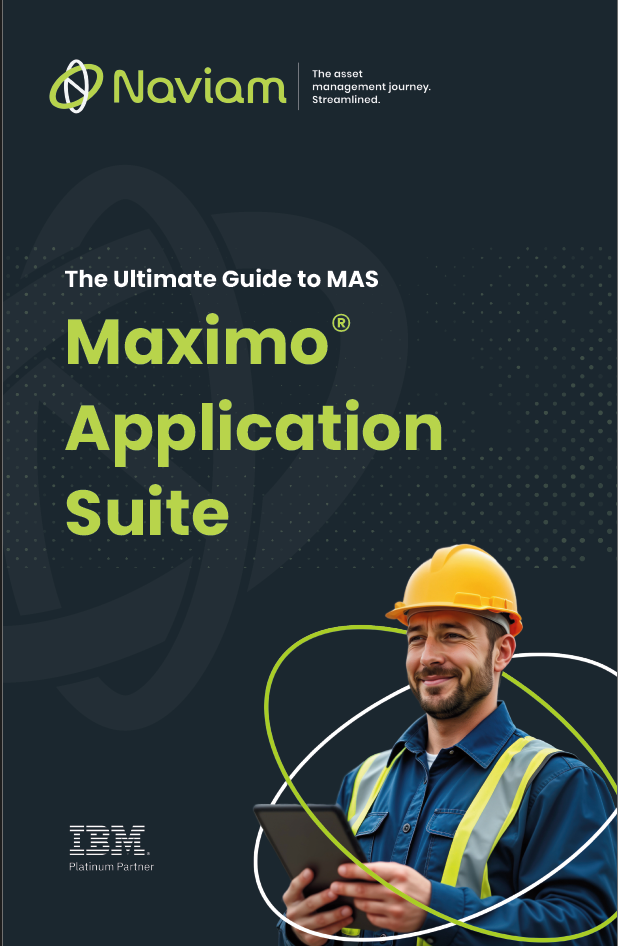
Unlock the Ultimate Guide to IBM Maximo Application Suite (MAS)

Discover everything you need to know to modernize your asset management strategy.

Inside, you’ll learn:
  • What’s new in IBM Maximo Application Suite 9.0
  • Key differences between Maximo 7.6 and MAS
  • How AppPoints and OpenShift change the game
  • Industry use cases across energy, manufacturing, and transportation
  • Step-by-step guidance for upgrading and migration readiness
Cover of 'The Ultimate Guide to MAS Maximo Application Suite' by Naviam featuring a man in a yellow construction helmet and safety vest holding a tablet.
×

ActiveG, BPD Zenith, EAM Swiss, InterPro Solutions, Lexco, Peacock Engineering, Projetech, Sharptree, and ZNAPZ have united under one brand: Naviam.

You’ll be redirected to the most relevant page at Naviam.io in a few seconds — or you can go now.

Read Press Release