While Process and Functional Reviews focus on how the business operates and how the system is used, the Technical Review focuses on something equally critical:

Is the platform itself stable, performant, and ready to support current and future demands?

A Technical Review evaluates the health, architecture, and performance of a Maximo or MAS environment, ensuring it is reliable, scalable, and aligned with best practice.  

Why Technical Reviews Matter

Even well-implemented Maximo or MAS solutions can degrade over time:

  • Performance slows as data volumes grow
  • Integrations become outdated or fragmented
  • Background processes become inefficient
  • Environments fail to keep pace with delivery needs

In many cases, these issues are not immediately visible but gradually impact:

  • User experience
  • System stability
  • Delivery timelines
  • Confidence in the platform

A Technical Review provides a structured way to identify and resolve these underlying issues before they become operational risks.

What a Technical Review Assesses

A Technical Review examines the underlying implementation of Maximo or MAS to confirm the platform is performing effectively and is fit for future use. This typically focuses on four key areas:

Platform Performance

  • Review of server and database performance
  • Identification of slow-running transactions or system bottlenecks
  • Analysis of how performance impacts user activities

Performance issues are often symptoms of deeper problems, making this a critical starting point.

Architecture and Infrastructure

  • Assessment of overall system architecture
  • Review of hosting environment and infrastructure setup
  • Evaluation of whether the platform is resilient, scalable, and aligned with best practice

This ensures the system can support both current operations and future growth.

Integrations and Interfaces

  • Review of integration patterns and technologies
  • Identification of legacy or inefficient approaches (e.g. file-based or interface table integrations)
  • Opportunities to modernise and future-proof integrations

Integration design is a key factor in both system performance and long-term maintainability.

Background Processes and System Efficiency

  • Identification of long running or inefficient background tasks (e.g. CRON tasks)
  • Review of automation and system scheduling
  • Analysis of system load and process optimisation opportunities

These processes are often “invisible” to users but can have a significant impact on performance.

Environment Strategy

  • Review of non-production environments (Dev, Test, UAT)
  • Assessment of whether environments meet delivery and testing needs
  • Identification of gaps that could impact project delivery or change management

A strong environment strategy is essential for safe and efficient system evolution.

How the Review is Delivered

The Technical Review is typically led by a Technical Maximo Consultant, supported by infrastructure specialists where required.

The approach includes:

  • System-level analysis of infrastructure and performance
  • Review of integrations and technical architecture
  • Assessment of configuration and background processing

The objective is to translate technical findings into clear, business-relevant insights, ensuring that recommendations can be understood and acted upon.

What the Review Reveals

A Technical Review often uncovers issues that may not be visible at a functional or process level, such as:

  • Inefficient background processes impacting system responsiveness
  • Architecture decisions that limit scalability or resilience
  • Integration approaches that introduce unnecessary complexity or risk
  • Environment limitations that slow down delivery or testing

It also frequently highlights a key challenge: Technical debt accumulates quietly, but its impact is felt across the entire organisation.

Typical Outputs and Deliverables

The Technical Review produces targeted, risk-based recommendations designed to improve system performance and reliability.


Key deliverables include:

  • Detailed documentation of current technical findings
  • Identification of performance bottlenecks and risks
  • Prioritised recommendations for improvement from the supporting materials, this also includes:
  • Recommendations to address system performance concerns and inefficiencies  
  • Guidance on modernising integrations and architecture
  • Identification of technical debt and opportunities for optimisation

The emphasis is on practical, actionable improvements rather than theoretical analysis.

Connecting Technical Review to Business Outcomes

The Technical Review plays a critical role in delivering the overall SAR outcomes:

  • Optimised – improved performance reduces delays and inefficiencies
  • Stable – robust architecture reduces system failures and risk
  • Scalable – modern design supports future growth and MAS capabilities
  • Trusted – reliable performance builds confidence among users  

Without a strong technical foundation, improvements in process or functionality cannot be sustained.

The Role of Technical Review in the SAR Lifecycle

Within the SAR lifecycleDiscover → Assess → Gaps & Risks → Recommend → Roadmap — the Technical Review ensures that:

  • The platform can support defined business processes
  • Functional enhancements can be delivered effectively
  • Future MAS adoption is technically viable

It provides the technical baseline required to underpin both short-term fixes and long-term transformation.

Final Thoughts

If the Process Review ensures the business is working efficiently, and the Functional Review ensures the system is being used effectively, the Technical Review ensures the platform itself is strong enough to support both.

By assessing performance, architecture, integrations, and technical design, the Technical Review enables organisations to:

  • Resolve performance challenges
  • Reduce technical debt
  • Improve system resilience and reliability
  • Prepare for future MAS adoption and expansion

In many cases, it is the difference between a system that merely functions and one that is truly enterprise ready.

MORE Community Logo
Live from the MORE community

Your Maximo questions probably already have answers

See what Maximo users are asking, answering, and solving right now.

Unlock the Ultimate Guide to IBM Maximo Application Suite (MAS)

Discover everything you need to know to modernize your asset management strategy.

Inside, you’ll learn:
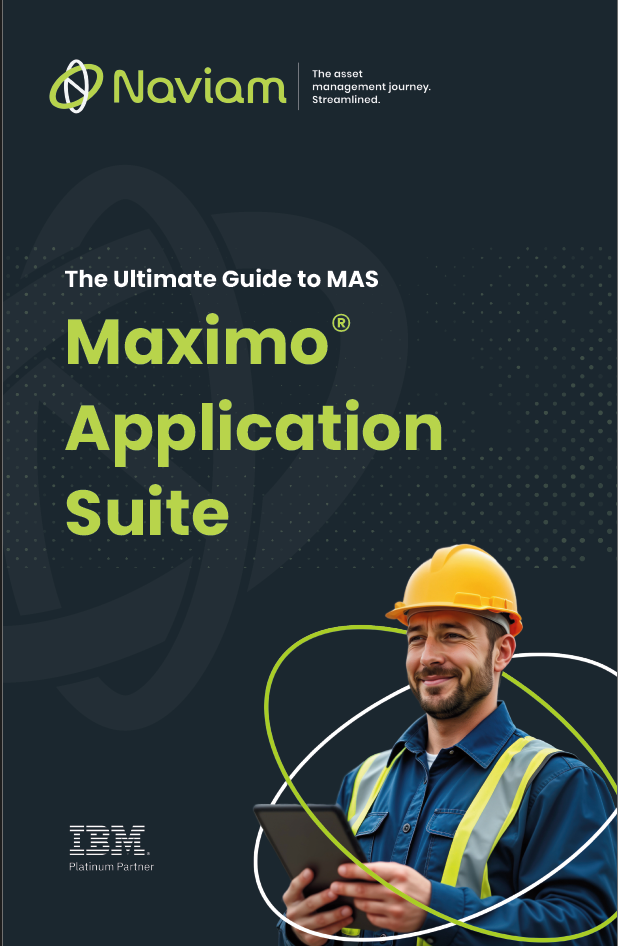
  • What’s new in IBM Maximo Application Suite 9.0
  • Key differences between Maximo 7.6 and MAS
  • How AppPoints and OpenShift change the game
  • Industry use cases across energy, manufacturing, and transportation
  • Step-by-step guidance for upgrading and migration readiness
Cover of 'The Ultimate Guide to MAS Maximo Application Suite' by Naviam featuring a man in a yellow construction helmet and safety vest holding a tablet.
×

ActiveG, BPD Zenith, EAM Swiss, InterPro Solutions, Lexco, Peacock Engineering, Projetech, Sharptree, and ZNAPZ have united under one brand: Naviam.

You’ll be redirected to the most relevant page at Naviam.io in a few seconds — or you can go now.

Read Press Release