
Key Water Utility Insights from World Water‑Tech 2026
Utilities across the UK and Europe are facing a familiar but increasingly acute challenge: how to deliver greater resilience and performance without increasing budgets.
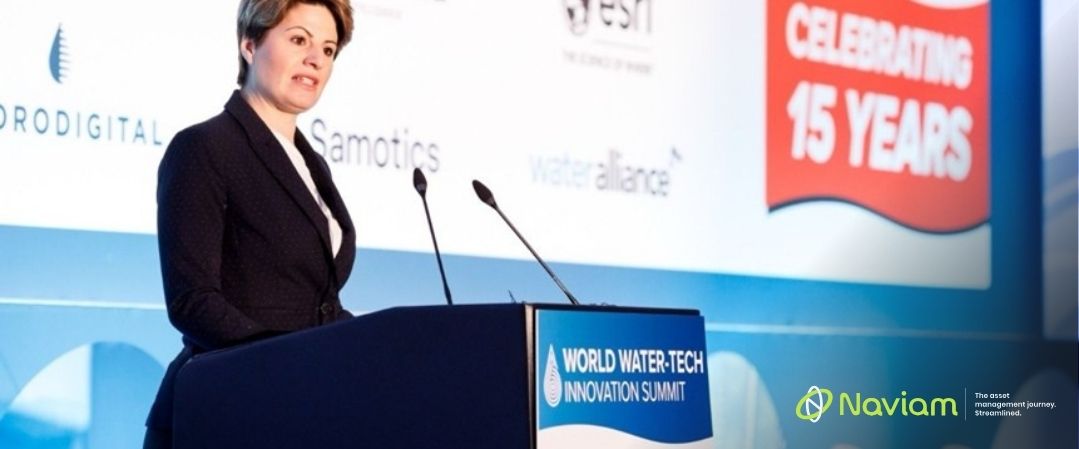
That tension was evident throughout the World Water‑Tech Innovation Summit in London this February - from the Water Minister’s opening keynote through to discussions with utility leaders on the show floor. The consistent message was clear: while long‑term reform remains essential, the immediate focus is on making existing infrastructure, assets and systems work harder and perform better in the near term.
While the event showcased a wide range of technologies and approaches, the message from utilities themselves was remarkably consistent. The focus is no longer on large transformation programmes or wholesale system replacement. Instead, attention is firmly on extracting more value from what already exists.
Water utilities are operating in a constrained environment shaped by several structural realities:
Against this backdrop, resilience is no longer being defined by new platforms or ambitious transformation roadmaps. It is being measured by operational performance today: how reliably assets perform, how quickly issues are addressed, and how effectively teams can act on the information they already have.
One of the clearest insights from the event was that the sector is not short of data, analytics or technology. Most utilities already have significant volumes of asset, operational and condition data available to them.
The real constraint is execution.
Turning insight into consistent action in the field remains the biggest challenge, whether that’s prioritising the right work, equipping field teams with trusted information, or reducing the volume of reactive maintenance that consumes time and budget.
As a result, utilities are increasingly focused on:
This marks an important shift away from innovation for innovation’s sake, towards solutions that demonstrably improve day‑to‑day operational outcomes.
Another strong theme was pragmatism. Utilities are looking for solutions that work within existing environments, rather than requiring wholesale change.
There was a clear move away from:
Instead, utilities want approaches that integrate with their current platforms, enhance existing processes, and deliver measurable improvements in areas that matter to regulators and customers alike such as leakage, supply interruptions and pollution incidents.
For enterprise asset management platforms such as IBM Maximo, this shift creates a significant opportunity.
An EAM system only creates value when it changes behaviour in the field.
Rather than replacement, the emphasis is on optimisation: improving how systems are configured, adopted and used in practice. That includes better supporting field execution, strengthening decision support, and ensuring asset strategies translate into real‑world outcomes.
From a technology partner perspective, the greatest value now lies in helping utilities improve performance within their current environments, not in asking them to start again.
From a commercial and market positioning standpoint, these themes strongly reinforce a message increasingly heard across the water sector: utilities are under pressure to deliver resilience within existing budgets by getting more value from the assets and systems they already have.
That framing reflects the reality utilities are facing today. It also underlines why outcome‑led improvement, focused on operational performance, asset reliability and execution, is increasingly replacing transformation‑led messaging.
As the sector continues to balance rising expectations with finite resources, the organisations that succeed will be those that turn insight into action, and capability into consistent operational results.
At Naviam, we work with water utilities to help turn insight into consistent operational execution - improving asset performance, reliability and field decision‑making within existing environments.
Our focus is on optimising and extending the value of enterprise asset management platforms such as IBM Maximo, helping organisations reduce reactive work, improve data trust, and deliver measurable operational outcomes without the disruption of large‑scale system replacement.
If you’d like to learn more about how Naviam supports water utilities in getting more value from the assets and systems they already have, get in touch or explore our work in the water sector.
Discover everything you need to know to modernize your asset management strategy.
Inside, you’ll learn:


ActiveG, BPD Zenith, EAM Swiss, InterPro Solutions, Lexco, Peacock Engineering, Projetech, Sharptree, and ZNAPZ have united under one brand: Naviam.
You’ll be redirected to the most relevant page at Naviam.io in a few seconds — or you can
go now.



.avif)